Animal Protein Vs Plant Protein: What Actually Matters Here
By:Author:Carnimeal Editorial
Updated on:October 20, 2026

- Does Animal Protein Beat Plant Protein for Muscle and Fullness?
- How Amino Acids and Digestibility Actually Differ
- How Much Protein You Actually Need Each Day
- Why Eating Less Often Beats Constant Combining
- Making Animal Protein Choices Work on a Normal Week
- The Myth That Plant Protein Can't Build Muscle
- What Changes the Result Between the Two
- Common Errors That Sabotage Protein Intake
- Getting Your Protein Approach Tailored With Carnimeal
- Choosing a Protein Source You'll Actually Stick With
Animal protein gives you all nine essential amino acids in one food, usually in a ratio your body uses efficiently. Plant protein can do the same job, but it often takes more planning and more volume to get there.
The mechanism comes down to amino acid completeness and digestibility - how much of what you eat actually gets absorbed and used. Animal sources tend to score higher on both counts, while plant sources vary a lot depending on the food.
This article covers how the two compare, how much protein you actually need, where plant protein falls short for some goals, and what changes the result regardless of which camp you're in.
Does Animal Protein Beat Plant Protein for Muscle and Fullness?
For muscle repair and feeling full, animal protein has a mechanical edge - it's a complete amino acid profile in a compact amount of food.
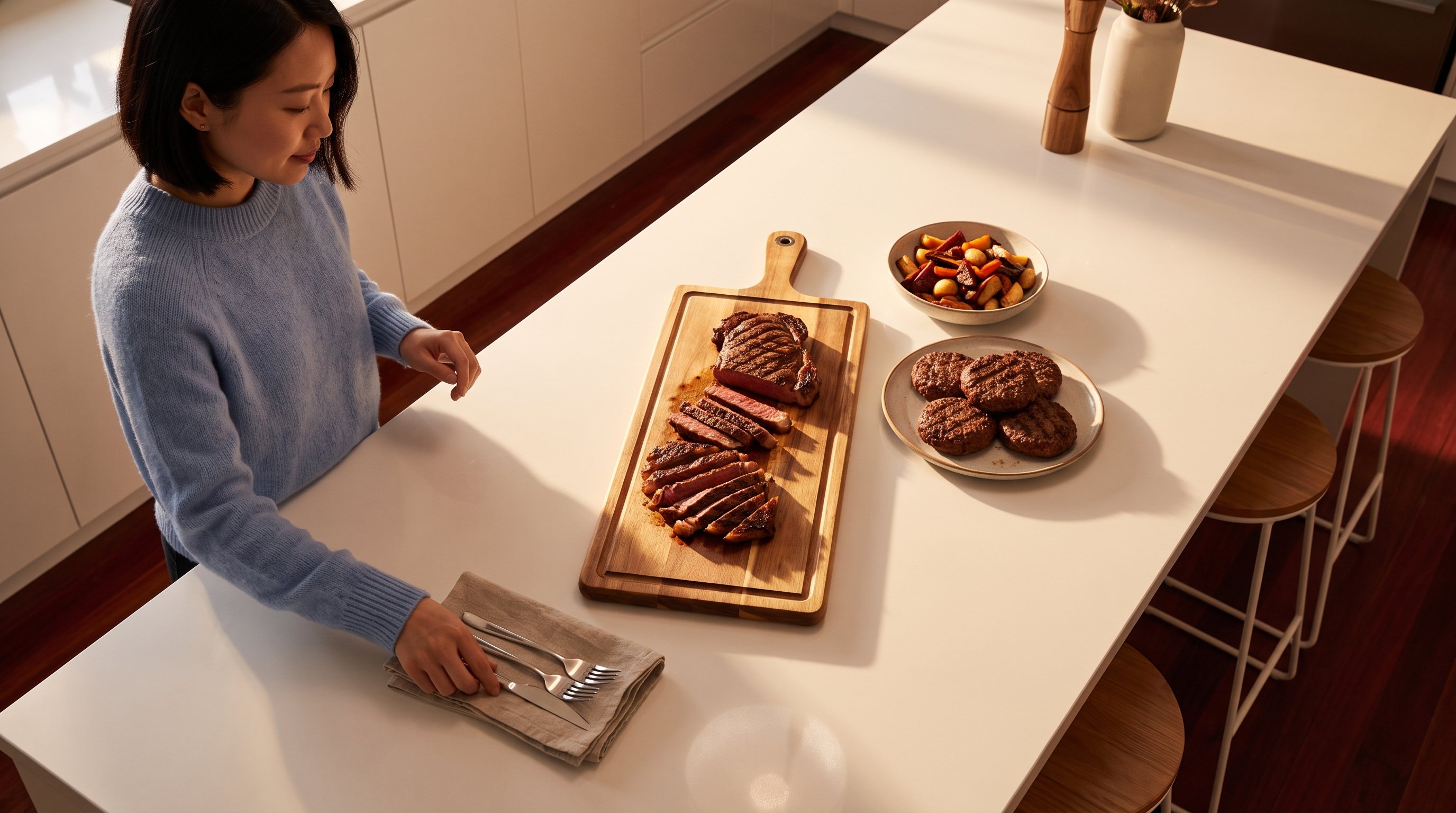
A 200g steak delivers roughly 50g of protein with every essential amino acid present. Getting the same 50g from plants might mean combining several sources - beans, grains, nuts - across a bigger volume of food just to hit the same number.
That's not plant protein failing. It's just more arithmetic and more planning required to land on the same total.
How Amino Acids and Digestibility Actually Differ
Both parts of this mechanism matter more than most people realise when they're comparing protein sources on a label alone.
Amino Acid Completeness
Animal protein naturally contains all nine essential amino acids your body can't make on its own. Most single plant foods are missing or low in at least one, which is why plant-based eating usually means mixing sources across the day.
How Much the Body Actually Absorbs
Digestibility is about how much protein you eat versus how much your body can actually use. Animal protein tends to be absorbed at a higher rate, while some plant proteins come bundled with fibre and compounds that slow or reduce absorption.
How Much Protein You Actually Need Each Day
Working Out Your Daily Target
A common reference point is around 1.6 to 2.2g of protein per kg of bodyweight if you're active and want to maintain or build muscle. For someone at 80kg, that's 128 to 176g a day - a wide range, but it shows why the source matters less than hitting the number.

Here's how that target plays out depending on where the protein comes from.
| Food | Protein Per Portion | Notes |
|---|---|---|
| Beef (200g) | ~50g | Complete amino profile |
| Eggs (3 large) | ~18g | Complete, smaller portion |
| Lentils (1 cup cooked) | ~18g | Needs pairing for completeness |
| Tofu (200g) | ~16g | Complete but lower density |
| Chicken breast (200g) | ~46g | Complete amino profile |
Why Eating Less Often Beats Constant Combining
The harder alternative here is building every meal from scratch around plant combining - pairing rice with beans, grains with legumes - just to get a complete amino profile.
The easier route is reaching for a food that's already complete on its own, like meat, fish or eggs, so there's no mental maths at mealtime.

Adherence usually comes down to friction. Fewer decisions at the table tends to mean a routine that actually survives a busy week, regardless of which protein source you prefer.
Making Animal Protein Choices Work on a Normal Week
Most people don't abandon a protein strategy because the food is wrong - they abandon it because nobody told them what to actually cook on a Tuesday night.
That's where a meal plan built around food you already like matters more than any theory about amino acids. A customized meal service gives you customized recipes and goal-focused sections so the protein target isn't something you're guessing at meal by meal.
It won't change what protein does in the body, but it does take the planning out of your hands and puts a workable structure in front of you instead.
The Myth That Plant Protein Can't Build Muscle
No, plant protein doesn't fail to build muscle - that's not how the body works.
Muscle responds to total protein intake, amino acid completeness and training stimulus, not to the food group it came from. The real difference is volume and planning: you may need to eat more plant food, more deliberately combined, to land the same amino acid total as a smaller portion of animal protein.
The honest answer is that either source can support muscle, but one takes less arithmetic to get there.
What Changes the Result Between the Two
Three things decide whether your protein strategy actually works, whatever source you're eating from.
The Biggest Factors
- Total daily protein - hitting your gram target matters more than the exact source it came from.
- Amino acid completeness - complete sources need less planning, incomplete sources need combining across the day.
- Consistency over time - a protein target hit most days beats a perfect day followed by three missed ones.
Common Errors That Sabotage Protein Intake
Counting Grams of Food Instead of Grams of Protein
A 200g portion of lentils isn't 200g of protein - it's closer to 18g. Check the actual protein content per portion rather than assuming a big plate means a big protein number.
Relying on One Plant Source All Day
Eating only one type of plant protein can leave you short on a specific amino acid. Rotate sources across the day, or lean on a complete source like meat or eggs to close the gap.
Ignoring Digestibility Differences
Not all protein grams on a label are used equally once eaten. Factor in that some plant proteins are absorbed at a lower rate, so the number on the packet isn't the whole story.
Skipping Protein at Breakfast
Loading all your protein into dinner leaves the rest of the day short. Spread your total across meals so your body has a steady supply rather than one big dose.
Getting Your Protein Approach Tailored With Carnimeal
Once you know your protein target, the next problem is turning that number into meals you'll actually cook on a Wednesday.
Carnimeal builds a book around your goal, your body and your eating style, with customized carnivore recipes and a deep-dive section focused on what you're trying to achieve. Instead of calculating amino acids meal by meal, you get practical lifestyle and nutrition advice that's already mapped to your protein target.

Start Your Carnivore Plan
Your Meat-Based Diet
Choosing a Protein Source You'll Actually Stick With
Animal protein and plant protein both get you to the same place - amino acids your body can use - but one route usually takes less planning to get there.
Pick the approach that fits how you actually eat, start tracking your daily total rather than guessing, and let a structured meal plan handle the structure so the decision doesn't have to happen fresh at every meal.
FAQ
Animal protein is more complete and absorbed more efficiently, which means less planning to hit your target. Plant protein can still meet the same total, it just usually takes more volume and combining across the day.
Yes, muscle responds to total protein and training, not the food group it came from. You'll likely need to eat more plant food, deliberately varied, to match the amino acid completeness of a smaller portion of animal protein.
The biggest barrier is usually planning fatigue - figuring out which plant foods to combine, or which animal cuts fit your goal. Carnimeal removes a lot of that guesswork by giving you recipes and a structure already built around your target.
Most people drop off because they're estimating portions instead of checking actual protein grams, or they load it all into one meal. Spreading protein across the day and checking real numbers per portion keeps the target realistic.
Share this post