Quick Carnivore Dinners: A No-Fuss Way To Eat Well Tonight
By:Author:Carnimeal Editorial
Updated on:October 18, 2026

- Can a Fast Meat-Based Meal Actually Deliver at Dinner?
- One Pan Tonight or a Full Recipe: The Real Trade-Off
- Why Fewer Steps Beats a More Elaborate Dinner Routine
- Matching a Fast Dinner to Your Actual Evening
- Fitting Fast Meat-Based Meals Into an Ordinary Week
- The Myth That Simple Dinners Mean Boring or Bland Food
- Getting Quick Dinners Tailored to Your Goal With Carnimeal
- Making Tonight's Dinner the Easy Choice
A fast meat-based dinner usually comes down to one pan, one protein, and heat - most cuts are done in under 15 minutes. The mechanism is simple: fewer ingredients means fewer decisions and fewer steps between the fridge and the plate.
No sauces to reduce, no grains to time, no sides to coordinate. Just meat cooked properly and maybe a pat of butter at the end.
This article covers whether the fast approach actually holds up, how it compares to a more involved dinner routine, who it suits, and how to make it part of an ordinary week without overthinking it.
Can a Fast Meat-Based Meal Actually Deliver at Dinner?
Yes, and the reason is mechanical rather than magical. A steak, some mince, or a few chops need heat and time - nothing else is required to make them edible or satisfying.
Cut the ingredient list down to meat, fat, and salt, and you remove most of the steps that make cooking feel like a chore: no chopping vegetables, no simmering a sauce, no washing three extra pans.
The Honest Arithmetic
If a standard dinner involves a protein, a starch, and two sides, that's roughly four components to prep, cook, and time together. Drop it to one component - the meat - and you've cut the moving parts by about three quarters, which is most of where the time actually goes.
That arithmetic doesn't change the nutrition on the plate, but it does change how likely you are to actually cook instead of ordering in.
One Pan Tonight or a Full Recipe: The Real Trade-Off
The choice most people are actually weighing on a weekday isn't a one-pan meat-based approach versus something else - it's a one-pan meat plate versus a multi-step recipe with sides, sauces, and separate timings.
Both can land on the same plate of protein and fat. The difference is in how many decisions and dishes stand between you and eating.
| Approach | Prep Time | Dishes Used | Decisions Needed |
|---|---|---|---|
| One-Pan Meat Plate | 5 minutes | One pan, one plate | Protein, salt, heat |
| Full Recipe With Sides | 20 to 30 minutes | Pan, pot, cutting board | Timing, sides, sauce |
| Pre-Cooked Protein Reheat | 3 to 5 minutes | One pan or skillet | Reheat method only |
| Takeaway Order | 20 to 40 minutes wait | None at home | Menu, delivery time |
| Batch-Grilled Meat Plus Egg | 5 to 8 minutes | One pan, one plate | Portion size only |
Why Fewer Steps Beats a More Elaborate Dinner Routine
An elaborate dinner routine - marinades, multiple sides, a sauce from scratch - can taste great, but it only works on the nights you have the energy for it.
A one-pan meat plate works on every night, including the tired ones, because the floor for effort is so low.
Adherence beats optimisation here. A simple dinner you'll actually make five nights running does more for you than a brilliant recipe you only manage once.
That's the whole argument for the easier route: it doesn't need willpower, it needs a pan and twelve minutes.
Matching a Fast Dinner to Your Actual Evening
If You're New to Cooking Meat Simply
Stick to one cut you already know - mince, a thin steak, or chicken thighs - and cook it the same way a few nights in a row until it's automatic. Confidence comes from repetition, not variety.

If You're Short on Time Most Weeknights
Keep the cooking method to one pan and one temperature setting, so there's nothing to coordinate. A hot skillet and a timer on your phone covers almost everything.
If You're Cooking for One
Portion size is the main adjustment - a single cut sized for one person means no leftovers to plan around unless you want them. Cook exactly what you'll eat and skip the rest.
If You're Feeding a Household
Scale the same cut up rather than cooking different things for different people. One large tray of chops or a bigger pan of mince keeps the method identical, just the quantity changes.
Fitting Fast Meat-Based Meals Into an Ordinary Week
The real test isn't one good dinner, it's whether the same approach survives a Tuesday when you're tired and a Friday when plans change.
That's where having a plan built around food you already like matters more than finding new recipes - the fewer decisions left for a tired brain, the more likely dinner actually happens.
This is the kind of structure goal-focused meal planning is built around: a goal-focused section plus recipes matched to how you actually like to eat, so dinner doesn't depend on motivation showing up.
It won't cook the meat for you, but it removes the guesswork about what to put in the pan and how much.
The Myth That Simple Dinners Mean Boring or Bland Food
The myth worth addressing head-on: that quick and simple automatically means bland. It doesn't.
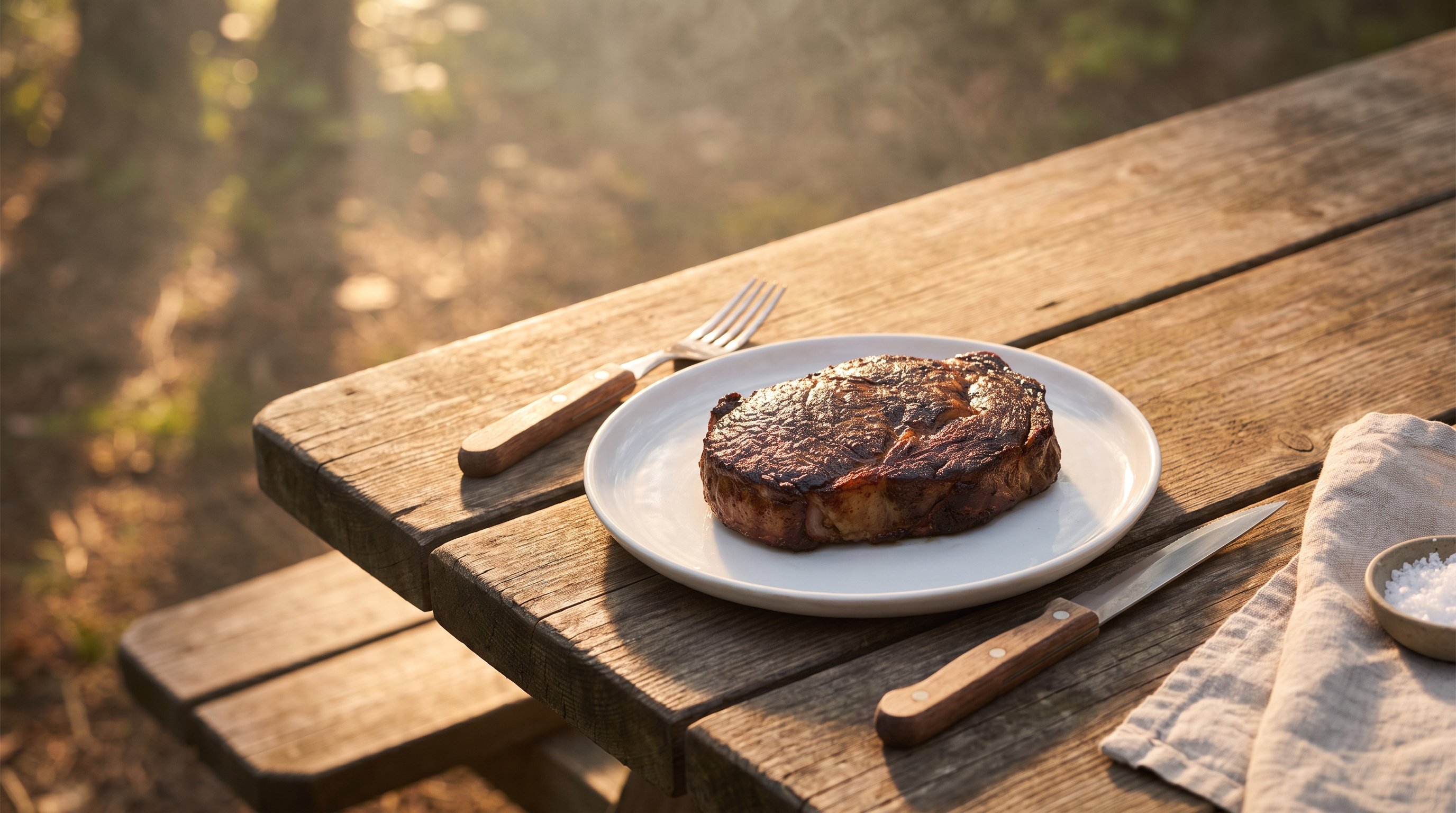
Salt, a hot pan, and a good cut of meat produce a proper crust and real flavour without any extra steps - the Maillard reaction that browns meat doesn't need a marinade to happen.
What simple dinners won't do is promise fast results on the scale or overnight change - no meal, however well cooked, works that way. Food quality and consistency matter; a single dinner never will.
Getting Quick Dinners Tailored to Your Goal With Carnimeal
A generic list of fast dinner ideas can only go so far, because it doesn't know your goal, your schedule, or which cuts you actually enjoy eating.
Carnimeal is built to close that gap - it's customized from cover to cover, with recipes matched to your eating style and a section dedicated entirely to your specific goal.
Instead of guessing which quick meals fit your week, you get practical lifestyle and nutrition advice plus the structure to stay consistent without re-planning dinner from scratch every night.

Start Your Carnivore Plan
Your Meat-Based Diet
Making Tonight's Dinner the Easy Choice
Pick one cut, one pan, and cook it tonight - that's the whole starting point, and it's enough to prove the approach works before you add anything else.
Carnimeal can take over from there, giving the plan and the recipes a shape so the next dinner doesn't start from a blank page.
FAQ
A simpler dinner can make it easier to eat consistently, and consistency is what tends to matter most over time. No single meal or timeframe can be promised, so focus on repeatable habits rather than a number.
It depends on the cut - mince and chicken thighs are usually cheaper than a weekly shop full of varied ingredients that go half-used. Buying fewer, simpler items often balances out against a longer grocery list.
A single cut in a hot pan with salt takes around ten to fifteen minutes, which is close to the floor for any home-cooked meal. If even that feels like too much most nights, batch-cooking once and reheating closes the gap.
That's normal, and it's usually a sign you need a bit more structure rather than more willpower. Carnimeal's goal-focused recipes are built to add variety that still matches your eating style, so repetition doesn't mean boredom.
Share this post